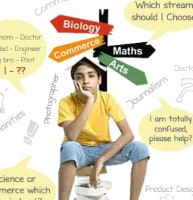
Choosing a university in 2026 is no longer simply about selecting a degree and attending classes for the next three or four years. Students are increasingly looking for an environment where they can explore different subjects, understand emerging fields, work across disciplines and gradually discover the direction they want to take in their professional lives.
Chandigarh University (CU), Mohali has developed a broad academic ecosystem that brings together engineering, computing, business, law, design, architecture, biotechnology, sciences, humanities, media, healthcare, tourism and several other disciplines. Its current 2026–27 admission portfolio includes undergraduate, postgraduate and specialised programmes across a wide range of academic areas.
This multidisciplinary structure can be particularly valuable for students who do not want their university experience to remain restricted to one narrow subject. A technology student can explore management, a business student can understand data and AI, while students from creative disciplines can interact with technology and entrepreneurship.
For students considering Chandigarh University in 2026, the larger opportunity is therefore not only to earn a qualification but to build an educational journey around curiosity, experimentation and continuous learning.
- A University With Many Academic Directions
- Learning Across Different Disciplines
- New-Age Subjects for Changing Careers
- From Subject Knowledge to Experiential Learning
- Technology as a Common Language
- Entrepreneurship Beyond the Business School
- Global Learning Without Leaving the Campus
- The First Year as a Discovery Phase
- A Campus Built Around Different Interests
- Preparing Students to Keep Learning
- Final Thoughts
- Frequently Asked Questions
Ready to take the next step?
1. A University With Many Academic Directions
One of the biggest advantages of a multidisciplinary university is the number of directions available to students. Instead of being surrounded by only one academic field, students become part of an ecosystem where different areas of knowledge exist alongside one another.
CU’s current programme portfolio covers areas such as Engineering, Management, Computing, Animation and Multimedia, Tourism and Hospitality, Pharma Sciences, Biotechnology, Architecture, Commerce, Legal Studies, Media Studies, Humanities, Basic Sciences and Applied Health Sciences.
The university also lists specialised programmes connected with areas such as Data Science, Cloud Computing, Cyber Security, Artificial Intelligence, Business Analytics, Strategic HR, Banking and Financial Services, FinTech and AI, and other emerging areas.
This variety can help students understand that careers are not always divided into separate boxes. Modern professional roles often combine multiple skills. A data professional may need business knowledge, a designer may need technology awareness, and a manager may need to understand analytics and artificial intelligence.
A broad university environment can give students the opportunity to start developing that wider perspective while they are still studying.
2. Learning Across Different Disciplines
The problems faced by society rarely belong to just one subject.
Climate challenges involve science, technology, economics and policy. A digital product may require programming, design, marketing and business planning. Healthcare innovation can involve biotechnology, data science, engineering and management.
This is why interdisciplinary learning is becoming increasingly relevant in higher education.
CU’s academic structure brings together multiple institutes and fields, allowing students to study within a large educational ecosystem rather than an isolated department. The university describes its approach through experiential learning and programmes designed around changing academic and professional requirements.
For students, exposure to different disciplines can encourage them to look beyond the obvious answer. They may begin to understand how another subject approaches the same problem and how two seemingly unrelated areas can work together.
Over time, this can develop a more flexible way of thinking—an ability that becomes valuable when students encounter complex problems in higher education, entrepreneurship or professional life.
3. New-Age Subjects for Changing Careers
The career landscape students enter after graduation may look very different from the one that existed when their parents began working.
Artificial intelligence, cybersecurity, cloud computing, data science, financial technology and digital communication are creating new responsibilities across many sectors. At the same time, traditional professions are also adopting new technologies.
Chandigarh University’s 2026 academic portfolio reflects this changing environment with specialised options such as CSE Data Science, CSE Cloud Computing, CSE Cyber Security, CSE with TCS, MBA Business Analytics, MBA Strategic HR, MBA FinTech & AI, MBA Banking, Financial Services & Insurance and other specialised programmes.
The university is also introducing or highlighting new-age academic areas in its 2026 admission material, including Robotics & Automation Engineering, Cyber Security and Blockchain, Artificial Intelligence in Healthcare, FinTech & Applied Finance, Digital Media and Communication, Bioinformatics & Life Sciences and Sustainable Architecture and Design.
For students, the benefit of such programmes is that they can explore emerging areas through a structured academic route instead of trying to understand everything independently.
Ready to take the next step?
4. From Subject Knowledge to Experiential Learning
Knowing a concept is important, but understanding how that concept behaves in a practical situation can make learning much more meaningful.
CU describes its engineering education through dynamic experiential learning and a flexible academic model, while its business school highlights innovation, entrepreneurial thinking and research-focused education. Its computing programmes also emphasise hands-on learning.
Experiential learning can take many forms. It may involve projects, simulations, practical assignments, laboratories, presentations, workshops or real-world problem-solving activities.
The advantage is that students are required to make decisions rather than simply remember information. A project may not work on the first attempt. A presentation may require improvement. A practical experiment may produce an unexpected result.
These situations teach students something that examinations alone cannot always provide: how to apply knowledge when there is no single answer already written in a textbook.
5. Technology as a Common Language
Technology is increasingly becoming a common layer across academic disciplines.
A management student may use analytics to understand customer behaviour. A finance student may work with financial technology. A healthcare professional may use digital systems and AI-based tools. A designer may use advanced digital software, while a media student may create content using emerging technologies.
CU’s current academic portfolio reflects this convergence through programmes connecting computing and technology with areas such as business, finance, healthcare and other disciplines.
The university also highlights technology integration as part of its campus environment and has included technology-focused initiatives within its student ecosystem.
This can encourage students to think of technology not merely as a subject to study, but as a tool that can be applied to different problems.
That perspective becomes increasingly useful as technology becomes part of almost every professional field.
6. Entrepreneurship Beyond the Business School
Entrepreneurship is sometimes treated as something only management students need to learn. In reality, entrepreneurial thinking can be useful to students from almost every discipline.
A student with a technical idea may need to understand customers. A designer may need to understand pricing. A biotechnology researcher may need to consider how an innovation can reach users. Even a student planning to work in a conventional organisation can benefit from learning how to identify opportunities and solve problems independently.
CU’s 2026 orientation material highlights a Government of India-supported Technology Business Incubator (TBI) that provides aspiring entrepreneurs with mentorship, incubation support, funding opportunities and access to industry experts.
The university’s orientation information also places entrepreneurship alongside sports, cultural pursuits and community engagement as areas where students can find opportunities to develop their interests.
This kind of ecosystem can make entrepreneurship accessible to students who have an idea but do not yet know how to take the first step.
Ready to take the next step?
7. Global Learning Without Leaving the Campus
Global exposure does not always have to begin with studying abroad.
Students can also experience international perspectives through multicultural classrooms, international faculty, exchange opportunities, international conferences and interaction with students from different countries.
CU’s international campus information states that students from 65 countries, 28 Indian states and 8 Union Territories are part of its wider student community.
The university’s 2026 orientation material also highlights collaborations with 530+ institutions across more than 100 countries, alongside international exchange programmes and international internships.
Such exposure can change the way students understand education itself. A concept discussed in class may be viewed differently by someone from another country. A group project may involve different communication styles. A conversation with an international student may introduce a new perspective on a familiar issue.
These everyday interactions can gradually build cultural awareness and global confidence.
8. The First Year as a Discovery Phase
The first year of university can be overwhelming because students are suddenly introduced to a new environment, new people and a much greater degree of independence.
A good transition can make this period easier.
Chandigarh University conducted its Freshmen Orientation and Induction Programme 2026 from 23 to 29 July 2026, designed to help new students become familiar with the campus, academics, university culture and available opportunities.
The university’s orientation programme includes campus familiarisation, academic briefings and interactive experiences intended to help students settle into their new environment. The official orientation information also describes the programme as a gateway to campus life and the opportunities available at CU.
This transition period is important because students are not expected to have everything figured out on their first day.
University can be the place where they discover their interests gradually—through subjects, projects, clubs, events, communities and conversations.
9. A Campus Built Around Different Interests
Students are not defined only by their academic programme.
Someone studying engineering may enjoy music. A business student may be interested in sports. A law student may enjoy technology. A computing student may have a passion for photography or public speaking.
CU’s campus-life ecosystem includes clubs, communities, department societies, student chapters, sports, cultural activities, technology events, youth festivals, conferences and other activities.
This gives students different ways to participate outside their regular academic schedules.
Such activities can also develop skills that are difficult to teach through conventional lectures. Organising an event can teach planning. Working in a club can teach teamwork. Participating in a competition can teach students how to handle pressure. Taking responsibility for a group can improve leadership.
These experiences can become an important part of a student’s personal development.
Ready to take the next step?
10. Preparing Students to Keep Learning
The most valuable education may not be the one that gives students every answer.
It may be the one that teaches them how to keep finding answers.
Chandigarh University’s multidisciplinary structure, experiential learning approach, emerging programmes, entrepreneurship ecosystem and global connections create multiple opportunities for students to keep exploring beyond their initial area of interest.
A student may enter university thinking they want to follow one particular career and discover a completely different interest during a project. Another may start with a conventional degree and later combine it with technology or entrepreneurship.
That flexibility can become especially important in a world where professional roles continue to change.
For students joining CU in 2026, the university experience can therefore be viewed as a continuous process of exploration: learning a subject, understanding its applications, discovering other fields and gradually creating a direction that fits their strengths.
For additional education and career guidance, students can explore CareerGuide.
For CUET-related information and counselling resources, students can also explore CareerGuide CUET.
11. Final Thoughts
Higher education is changing.
Students today are entering a world where one professional role can require knowledge from several different areas. Technology is influencing business. AI is entering healthcare. Data is transforming decision-making. Design is becoming important in technology products. Entrepreneurship is becoming relevant across disciplines.
In such an environment, studying one subject deeply is important—but learning how that subject connects with other areas can be equally valuable.
Chandigarh University offers a broad multidisciplinary ecosystem where students can explore academic programmes, emerging technologies, entrepreneurship, global interaction, student communities and experiential learning. Its 2026 academic and campus initiatives reflect an effort to provide students with opportunities that extend beyond conventional classroom education.
For a student joining CU in 2026, the biggest opportunity may therefore be the freedom to explore.
You can begin with one subject.
You can discover another interest.
You can work on a project.
You can meet someone from a completely different discipline.
You can test an idea.
And you can change your direction when you learn something new about yourself.
That is what makes university more than a degree.
Chandigarh University 2026 is an opportunity to build a broader learning journey—one that combines academic knowledge with curiosity, experimentation, global perspectives and the freedom to discover what comes next.
12. Frequently Asked Questions
Q1. What makes Chandigarh University a multidisciplinary university?
Ans: CU offers programmes across a wide range of fields including Engineering, Computing, Management, Law, Design, Architecture, Biotechnology, Sciences, Media, Humanities, Hospitality and Applied Health Sciences.
Q2. Which emerging programmes are available at CU in 2026?
Ans: CU’s current 2026 portfolio includes specialised areas such as Data Science, Cloud Computing, Cyber Security, Business Analytics, Strategic HR, FinTech & AI, Banking and Financial Services and other technology-oriented programmes.
Q3. Does Chandigarh University encourage entrepreneurship?
Ans: Yes. CU’s 2026 orientation information highlights a Government of India-supported Technology Business Incubator offering mentorship, incubation support, funding opportunities and access to industry experts for aspiring entrepreneurs.
Q4. Does CU provide international exposure?
Ans: Yes. CU highlights international exchange programmes, internships and collaborations. Its 2026 orientation material refers to collaborations with 530+ institutions across more than 100 countries.
Q5. How diverse is the CU student community?
Ans: CU’s international campus information states that its community includes students from 65 countries, 28 Indian states and 8 Union Territories.