Avantika University
⚡ Official Campus Guide
Choosing a design college after Class 12 can be difficult because “design” today covers far more than drawing, graphics or fashion. Students can explore careers in industrial design, UX, interaction design, transportation, animation, game design, communication, fashion and spatial design, with technology becoming an increasingly important part of the creative process. For students researching B.Des courses after 12th, understanding the specialisation, admission process, learning model and possible career directions is therefore just as important as choosing the college. Avantika University – MIT Institute of Design (MIT-ID), Ujjain, offers a design-focused academic environment built around studio learning, interdisciplinary exposure, projects and creative experimentation. Its current 2026–27 design admissions page lists B.Des pathways including Animation, Communication, Fashion, Interior & Furniture, Industrial, User Experience, Game, Interaction, Graphic and Transportation Design, with additional design offerings such as Information Design and Immersive Media appearing across the university’s current programme information. For students looking at B.Des after 12th in 2026, MIT-ID Avantika can therefore be explored not simply as a design degree provider, but as a place where students can decide which kind of designer they want to become.
🎓 Industry-Led Curriculum
📅 Admissions Open 2026–27
Admissions Open 2026–27
Ready to Take the Next Step at Avantika University?
Get complete admission requirements, portfolio guidance, scholarship details, and fee structure directly from Avantika University.
1
Why Design After 12th Is No Longer Limited to Drawing and Art
Students often assume that a B.Des programme is mainly about drawing, sketching or making attractive visuals. In reality, contemporary design education covers how people use products, interact with technology, understand information, experience spaces and connect with brands. This makes design relevant to industries ranging from technology and automobiles to entertainment, fashion, retail and digital services. MIT-ID Avantika’s current programme portfolio reflects this wider definition of design. Students can explore areas such as Industrial Design, User Experience Design, Interaction Design, Transportation Design, Communication Design, Animation Design, Game Design, Fashion Design and Interior & Furniture Design. The university also lists Information Design and Immersive Media Design among its broader design offerings. This variety means students do not have to decide that their future is limited to one traditional creative profession. Someone who enjoys technology may find UX or Interaction Design more interesting, while a student fascinated by vehicles may explore Transportation Design. Another student interested in storytelling could consider Animation, Communication or Game Design. The first step is therefore understanding what kind of problems the student enjoys solving.
2
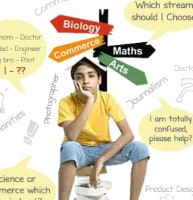
Which B.Des Specialisation Should You Choose at MIT-ID Avantika?
One of the biggest decisions for a design aspirant is choosing a specialisation because each discipline develops a different combination of creative, technical and professional skills. MIT-ID Avantika’s current B.Des admissions page lists multiple four-year design pathways, giving students the opportunity to explore different forms of design practice.
📊 Design Disciplines & Core Inquiry Questions
| Design Field | Core Question |
|---|---|
| Fashion Design | How do form, fabric, culture, and commerce intersect in wearable objects? |
| Interior Architecture & Design | How do humans experience, occupy, and navigate interior space? |
| Product Design | What does it take to make everyday objects functional, intuitive, and desirable? |
| Jewellery Design | How do metallurgy, craftsmanship, precious materials, and human desire converge? |
| Graphic Communication | How does visual language — typography, color, layout — convey meaning and provoke action? |
| UI/UX & Interaction Design | How do people engage with digital interfaces, and how can those interactions be intuitive? |
| Architecture (B.Arch) | How do structure, materiality, climate, and community converge into lasting physical environments? |
| Animation & Game Design | How do movement, timing, narrative, and interactive mechanics build engaging virtual worlds? |
The choice should be based on interests rather than simply selecting the specialisation that sounds popular. A student who enjoys observing how people use mobile apps may find UX or Interaction Design more relevant, while someone who enjoys physical making and objects may prefer Industrial Design. Similarly, students interested in visual storytelling can explore Communication, Graphic or Animation Design.
3
What Is the Eligibility for B.Des at MIT-ID Avantika?
Eligibility is one of the first things students search for when comparing design colleges after Class 12. MIT-ID Avantika’s current 2026–27 design admissions information states that B.Des applicants must have passed 10+2 from any stream, with recognised boards including State Boards, CBSE, ICSE, ISC, CIE, IB and NIOS or equivalent boards. The current programme listings specify a minimum 50% aggregate in all subjects. The fact that students from different Class 12 streams can apply is relevant because design attracts students from Science, Commerce and Humanities backgrounds alike. A Science student may bring an interest in technology and product development, while a Humanities student may have strengths in communication, culture and storytelling. Commerce students may be interested in branding, retail or design management. Eligibility, however, is only the first step. Students should also understand the applicable entrance and selection process because creative aptitude and design thinking can play an important role in admission.
Admissions Open 2026–27
Ready to Take the Next Step at Avantika University?
Get complete admission requirements, portfolio guidance, scholarship details, and fee structure directly from Avantika University.
4
Which Entrance Exam Is Required for MIT-ID Avantika Design Admission?
Admission preparation for a design college is different from preparing only for a conventional academic examination. MIT-ID Avantika’s current 2026–27 admissions page lists the Design Scholarship Test (DST) alongside recognised design entrance scores such as UCEED, NID-DAT and NIFT for its B.Des programmes. The published admission journey includes an online application, the DST and personal interview, followed by an offer of admission for selected candidates. This makes it important for applicants to understand which route applies to them and what documents or scores are required for the chosen programme. Students should not prepare only for general aptitude; they should also develop their ability to observe, visualise, communicate ideas and explain the reasoning behind their creative work. Because entrance requirements can vary between admission cycles and programmes, applicants should verify the latest 2026–27 requirements directly with MIT-ID Avantika before submitting an application.
5
How Should Students Prepare a Design Portfolio?
A portfolio can feel intimidating to a student who has never worked on a professional design project. The important thing to understand is that a portfolio is not necessarily a collection of expensive or professionally commissioned work. For a school student, it can demonstrate curiosity, observation, creativity, experimentation and the ability to develop an idea. Students preparing for design admissions can begin by maintaining a collection of their strongest sketches, illustrations, photographs, posters, digital experiments, physical models, craft explorations, typography work, animations or personal projects. More importantly, they should be able to explain how an idea developed from the first observation to the final outcome. This approach becomes especially useful when applying to different design disciplines. A student interested in Industrial Design could document sketches and physical prototypes, while someone interested in UX could show interface experiments and explain the user problem behind them. A student applying for Animation could show character development, storyboards or motion experiments. A strong student portfolio therefore does not need to demonstrate years of professional experience. It should give the admissions team an understanding of how the student observes, thinks, experiments and communicates ideas.
6
What Makes the MIT-ID Avantika Learning Model Different?
Design education becomes significantly different when students spend substantial time making, testing and discussing ideas rather than only listening to lectures. Avantika describes its design education through a studio-based, interdisciplinary and experiential approach, with the current 2026–27 admissions page highlighting studio-based learning, open discussions, interdisciplinary exposure and mentorship. The university’s programme information also describes B.Des education as four years and eight semesters, with project-based learning and an integrated cross-disciplinary approach. Current programme material includes subjects such as Introduction to Design, Fundamentals of Design, Drawing and Representation, Creative Visualization, Creative and Critical Thinking, Digital Design Tools and Design Methodology. This kind of curriculum can help students gradually move from learning design fundamentals to developing more specialised capabilities. Instead of immediately focusing only on software or a final product, students can first understand design principles and then apply them through projects and specialised studio work. The university also highlights workshops and design labs, industry visits and live projects, exhibitions, competitions and conferences as activities that extend learning beyond conventional classroom teaching.
7
What Career Options Can Students Explore After B.Des?
“B.Des career scope” is one of the most important questions students have before choosing a design degree. The answer depends heavily on the specialisation, portfolio, software and technical skills, internships, project experience and the type of industry a graduate wants to enter. For example, Industrial Design graduates can explore product development and design roles, while UX and Interaction Design graduates can work around digital products, interfaces and user experiences. Communication and Graphic Design can lead towards branding, visual communication and creative content, while Animation and Game Design can connect students with entertainment, gaming and digital media. Transportation Design can open pathways around mobility and vehicle design, whereas Interior & Furniture Design can lead towards spatial environments, furniture and exhibition-related work. Fashion students can explore apparel, textiles, fashion communication and related creative industries. The important point is that a B.Des degree does not automatically lead to one fixed job title. A student’s professional direction develops through the combination of specialisation + portfolio + tools + projects + internships + industry experience. MIT-ID Avantika’s current design ecosystem also highlights recruiters and collaborations involving organisations such as Infosys, Amazon, TCS, PepsiCo and Coca-Cola, although individual recruitment outcomes can vary by programme and graduating batch.
8
How Can Students Get Practical Experience During Design College?
One reason students choose design education is the opportunity to learn through actual making and experimentation. Reading about design principles is useful, but students also need opportunities to apply those principles to projects, prototypes, visual systems, digital experiences or other forms of creative work. MIT-ID Avantika’s current admissions information highlights industry visits, live projects, workshops and design labs, while also describing exhibitions, competitions and conferences as part of the broader student experience. The university’s design programme information describes project-based learning and an integrated cross-disciplinary approach, giving students opportunities to connect different areas of knowledge. This practical exposure can become particularly important when students begin building a professional portfolio. A classroom assignment can become a portfolio project when the student documents the problem, research, alternatives, iterations and final solution. Over time, these projects can help students demonstrate not only what they can make but also how they approach a design problem. For students researching design careers, this is an important distinction. Employers and clients generally need to understand what a designer can actually do, so practical work can become an important bridge between university education and professional opportunities.
9
What Is Campus Life Like for Design Students at Avantika?
Design students often benefit from environments where they can discuss ideas, work with materials, experiment with technology and interact with people from different disciplines. A residential campus can also make collaboration a more regular part of student life because academic and creative interactions can continue beyond scheduled classes. Avantika University‘s current design admissions page describes its campus as a residential environment where academics, creativity, culture and community come together, with studio-based learning, open discussions, interdisciplinary exposure and mentorship forming part of the experience. The university’s broader academic information describes a 60-acre campus with design studios, a FabLab, high-tech computer centre and Mac lab, library, engineering lab, indoor and outdoor sports facilities and an amphitheatre. For design students, these facilities can support different kinds of work. A student may move between digital tools, physical prototyping, studio discussions and project presentations depending on the discipline. The residential setting can also create opportunities for students from different design areas to exchange ideas and collaborate. This kind of environment can be particularly relevant for students who learn best through experimentation and interaction rather than through purely lecture-based education.
10
Final Thoughts and FAQs: Is MIT-ID Avantika Worth Exploring for B.Des in 2026?
✦ Final Thoughts & Key Advice
For students researching B.Des after 12th, MIT Institute of Design at Avantika University offers a wide range of design directions rather than a single definition of what a designer can be. Its current 2026–27 B.Des offerings include areas such as Industrial, Communication, User Experience, Interaction, Transportation, Interior & Furniture, Animation, Game, Graphic and Fashion Design, while the university’s broader programme listings also include Information Design and Immersive Media Design. The more important decision for an applicant is therefore to identify the type of design work they want to explore. Students interested in physical products can investigate Industrial Design, those fascinated by digital experiences can explore UX or Interaction Design, while students drawn towards storytelling, visuals, mobility, fashion or spaces have corresponding pathways. MIT-ID Avantika’s studio-based and project-oriented approach, combined with workshops, labs, industry visits, live projects and exhibitions, gives students multiple opportunities to turn ideas into tangible work. The current admission process also gives applicants a clear reason to begin preparing early: eligibility is only one part of the journey, while design entrance preparation, creative work and personal interaction can also matter.
Students researching design colleges, career options and higher-education pathways can also explore CareerGuide.com for broader career guidance and CareerGuide CUET for entrance-examination and counselling resources. Before applying, students should verify the latest MIT-ID Avantika admission dates, programme availability, fees and selection requirements directly with the university.
Admissions Open 2026–27
Ready to Take the Next Step at Avantika University?
Get complete admission requirements, portfolio guidance, scholarship details, and fee structure directly from Avantika University.
❓ Frequently Asked Questions (FAQs)
Q1.
What B.Des courses are offered by MIT Institute of Design at Avantika University?
Ans: MIT-ID Avantika’s current 2026–27 admissions page lists B.Des programmes in Animation, Communication, Fashion, Interior & Furniture, Industrial, User Experience, Game, Interaction, Graphic and Transportation Design. The university’s wider programme listings also include Information Design and Immersive Media Design.
Q2.
What is the duration of the B.Des programme at MIT-ID Avantika?
Ans: The university describes its B.Des programmes as four-year, full-time programmes covering eight semesters.
Q3.
What is the eligibility for B.Des at MIT-ID Avantika?
Ans: For the current 2026–27 admissions listings, candidates must have passed 10+2 from any stream and meet the stated 50% aggregate requirement, subject to the programme’s applicable admission conditions.
Q4.
Which entrance exams are accepted for MIT-ID Avantika B.Des admission?
Ans: The current 2026–27 admissions page lists the Design Scholarship Test (DST), UCEED, NID-DAT and NIFT as valid score routes for its B.Des programmes, subject to the university’s admission process.
Q5.
What is the Design Scholarship Test at MIT-ID Avantika?
Ans: DST is the design-focused admission/scholarship test referenced in the university’s current 2026–27 admissions process. The published admission journey also includes a personal interview for selected applicants.
Q6.
Which MIT-ID Avantika specialisation is suitable for a student interested in UI/UX?
Ans: Students interested in digital products, usability and human-computer interaction can explore User Experience Design and Interaction Design. The university describes UX as research-driven and human-centred, while Interaction Design focuses on how people engage with digital products, systems and emerging technologies.
Q7.
Is MIT-ID Avantika suitable for students interested in Product Design?
Ans: Yes. Its Industrial Design pathway focuses on developing products, services and systems around innovation, user needs and practical design considerations.
Q8.
What career options are available after B.Des from MIT-ID Avantika?
Ans: Career directions depend on the specialisation and the student’s skills and portfolio. Possible areas include product design, UX, interaction design, graphic design, communication, animation, gaming, transportation design, fashion and interior/spatial design.
Q9.
Does MIT-ID Avantika provide practical design learning?
Ans: Yes. The university highlights studio-based learning, project-based learning, workshops, design labs, industry visits, live projects, exhibitions, competitions and conferences as part of its design-learning ecosystem.
Q10.
Is admission open for MIT-ID Avantika in 2026–27?
Ans: The university’s current design admissions page states “Admissions Open 2026–27” and lists the Design Scholarship Test for December 20, 2026. Applicants should verify the latest application deadlines and programme-specific requirements directly with MIT-ID Avantika before applying.