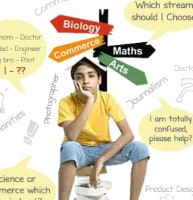
Design education is not only about learning how to draw, create graphics or make attractive products. A professional designer needs to understand people, materials, technology, communication, context and the problem behind a design brief.
At the Institute of Design, Nirma University, students follow a structured four-year Bachelor of Design journey that begins with a common foundation year before moving into specialised study. The institute currently offers B.Des. in Product and Interaction Design and B.Des. in Communication Design. The programme combines studios, classrooms, workshops, fieldwork, internships and project-based learning.
The academic journey is designed to gradually move students from learning fundamental design principles to developing specialised skills, undertaking internships and finally completing a major project or research-oriented outcome.
Ready to take the next step?
- Beginning With a Common Foundation Year
- Learning Through Materials, Models and Visual Thinking
- Choosing Between Product and Interaction Design and Communication Design
- Building Specialised Skills Through Projects
- Connecting Design With People and Context
- Learning Outside the Classroom Through Fieldwork and Industry
- Internships That Increase With Academic Experience
- The Final Year: From Student Work to a Major Project
- International and Professional Opportunities Beyond the Core Degree
- Final Thoughts
- Frequently Asked Questions

1. Beginning With a Common Foundation Year
One of the most important decisions in design education is choosing a specialisation. Students entering after Class 12 may have an interest in design without knowing exactly whether they prefer products, interaction, branding, animation, digital communication or other areas.
The Institute of Design addresses this through a common foundation year shared by its B.Des. programmes in Product and Interaction Design and Communication Design. The first two semesters are multidisciplinary, immersive and hands-on.
Students are introduced to areas such as drawing, model making, geometry, colour, elements of design, materials, space making and design processes. They also explore environmental studies and learn to observe people and their surroundings while approaching simple design problems.
This foundation gives students time to understand the basic language of design before committing themselves to a specialised direction.
2. Learning Through Materials, Models and Visual Thinking
Design ideas often become clearer when students physically experiment with them.
The curriculum therefore includes activities that move beyond theoretical discussion. Students can work with different materials, create models, explore form and develop visual representations of their ideas.
The foundation curriculum includes subjects such as Materials and Model Making, Materials and Space Making, Visualisation and Narratives, Introduction to Design Process, Drawing and Elements and Principles of Design.
This approach can help students understand that design is an iterative process. An initial idea may not work in its first form. A model may reveal a problem that was not visible in a sketch. A different material may change the way a product or space behaves.
Through repeated experimentation, students can gradually develop the ability to observe, modify and improve their work.
3. Choosing Between Product and Interaction Design and Communication Design
After the foundation year, students move towards their selected area of specialisation.
The Product and Interaction Design programme focuses on designing physical products and interactive experiences. Its curriculum covers areas such as mechanical and intelligent product design, furniture, packaging, CAD, 3D printing, prototyping and interaction technologies.
The Communication Design programme focuses on how ideas and information are communicated to particular audiences. Its academic areas include typography, photography, illustration, visual narratives, branding, digital design, websites, user experience, film and animation.| Design Path | Areas Students Explore |
|---|---|
| Product & Interaction Design | Products, furniture, packaging, CAD, prototyping, interaction, intelligent products |
| Communication Design | Typography, photography, branding, digital design, UI/UX, animation, film and visual communication |
Ready to take the next step?
4. Building Specialised Skills Through Projects
Specialisation becomes more meaningful when students begin applying concepts to increasingly complex design problems.
In Communication Design, the curriculum progresses from areas such as graphic design, photography and typography towards subjects including digital design, moving images, branding, UI/UX, interaction design, wayfinding and public communication systems.
Product and Interaction Design students similarly progress from basic utility products towards more complex areas involving advanced CAD modelling, manufacturing processes, human factors, technically complex devices, emerging materials, interaction technologies and public utility systems.
Project work forms an important part of this progression. Instead of simply learning a technique, students are expected to use design methods to develop tangible outcomes.
Over time, this can help students build a portfolio that demonstrates not only what they created but also how they approached a design problem.
5. Connecting Design With People and Context
Good design does not exist in isolation.
A product is used by people. A communication system is interpreted by an audience. A public utility serves a particular community. Understanding these relationships is therefore an important part of professional design education.
The Institute of Design’s philosophy places emphasis on human-centred design, empathy, collaboration, cultural and contextual needs, sustainability and ethical design practices.
The curriculum also introduces students to areas such as psychology, human factors, design research, systems thinking and environmental considerations.
This encourages students to look beyond appearance and consider why a design is needed, who will use it, what consequences it may create and how effectively it responds to its context.
6. Learning Outside the Classroom Through Fieldwork and Industry
Some aspects of design cannot be fully understood inside a classroom.
Students need to observe manufacturing processes, professional studios, museums, communities and real environments. Field visits can expose them to constraints and situations that may not appear in an academic assignment.
The Institute of Design includes field immersions and industry visits as part of its pedagogy. These can include visits to manufacturing units, professional studios, museums and monuments, along with longer field experiences in rural areas and Ahmedabad.
The institute also invites industry to participate in classroom projects, summer projects, internships and final-year degree projects. Its consultancy activities include areas such as product innovation, user studies, exhibition and museum design, branding, animation and live-action films.
Such interactions can help students understand how design problems operate in real professional and social environments.
7. Internships That Increase With Academic Experience
An internship can be more useful when it happens at the right stage of a student’s learning journey.
At Nirma University’s Institute of Design, internships are integrated into the undergraduate programme at multiple stages. The current programme structure describes a four-week apprenticeship after the foundation year, a six-week internship after the second year and an eight-week internship after the third year.
The progression is significant because students enter each internship with a different level of academic experience.
An early apprenticeship can introduce students to professional environments. A later internship can allow them to contribute using more specialised skills. By the third year, students may have a stronger understanding of their preferred area and can use the experience to develop professional connections and refine their career direction.
This makes internships part of the learning process rather than an activity added only at the end of the degree.
Ready to take the next step?
8. The Final Year: From Student Work to a Major Project
The final stage of a design degree can become an opportunity for students to bring together everything they have learned.
At the Institute of Design, the eighth semester includes a substantial project. Depending on the programme, this may take the form of an industry-sponsored project or a self-initiated research/innovation project. Product and Interaction Design also includes a Degree/Major Research Project.
For Communication Design, the final semester can involve a project sponsored by industry or NGOs, or a self-initiated project responding to a societal concern.
This stage can help students demonstrate their ability to independently define a problem, conduct research, develop concepts and produce a considered outcome.
It can also become an important part of a student’s professional portfolio when approaching employers, studios, consultancies or entrepreneurial opportunities.
9. International and Professional Opportunities Beyond the Core Degree
Students interested in expanding their academic experience can also explore opportunities beyond the standard four-year route.
The Institute of Design’s 2026 admission brochure highlights a 2+2 Dual Degree International Programme developed through the university’s collaboration with Iowa State University, USA. Under the International Collaborative Education Programme, students can study the initial part of their education at Nirma University before transferring to Iowa State University for advanced coursework and access to its academic and research environment. The programme is associated with degrees from Nirma University and Iowa State University.
Alongside international opportunities, the institute’s academic ecosystem includes visiting faculty, guest lecturers, industry experts, design workshops, exhibitions, seminars and professional interactions.
These experiences can give students additional perspectives on how design education and professional practice operate beyond their regular coursework.
10. Final Thoughts
A design degree becomes more valuable when students can see how their learning develops over time.
At the Institute of Design, Nirma University, the journey begins with a common foundation, moves into specialised study and gradually introduces students to increasingly complex projects, field experiences, internships and professional environments. The final stage brings these experiences together through a major project or research-oriented outcome.
For students considering design after Class 12, this structure provides an important advantage: they do not necessarily have to enter the programme already knowing every aspect of their future design career. The foundation year gives them an opportunity to explore, while later semesters allow them to develop deeper expertise.
The institute currently offers four-year B.Des. programmes in Product and Interaction Design and Communication Design, with the 2026 curriculum incorporating areas such as CAD, 3D printing, AI, interaction technologies, UI/UX, moving images, branding, systems thinking and research.
Students comparing design colleges should therefore look beyond programme names and evaluate the curriculum, studio learning, project opportunities, internships, industry interaction, international pathways, admission requirements and the kind of portfolio they can build during the degree.
For university comparisons, career planning and admission guidance, students can explore CareerGuide.com.
For undergraduate entrance examinations and counselling resources, students can also explore CareerGuide CUET.
11. Frequently Asked Questions
Q1. What programmes does the Institute of Design, Nirma University offer?
Ans: The Institute of Design currently offers two four-year undergraduate programmes: B.Des. in Product and Interaction Design and B.Des. in Communication Design.
Q2. What is common about the two B.Des. programmes?
Ans: Both programmes begin with a common two-semester foundation year. Students then move into their chosen specialisation from the second year onwards.
Q3. What do students study during the foundation year?
Ans: Foundation subjects include areas such as drawing, design principles, materials and model making, visualisation, space making, environmental studies and introduction to the design process.
Q4. What does Product and Interaction Design cover?
Ans: The programme covers areas including product design, furniture, packaging, CAD, 3D printing, prototyping, intelligent products, interaction technologies, emerging materials and public utility systems.
Q5. What does Communication Design cover?
Ans: Communication Design includes areas such as typography, photography, illustration, branding, digital design, websites, UI/UX, interaction design, moving images, animation, film and visual communication.