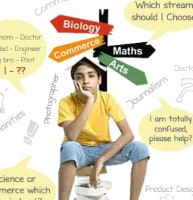
Choosing an engineering or technology programme often means selecting a specialisation at a very early stage. Students may have to decide between computer science, robotics, biology, data science or another discipline before they have had enough opportunity to understand what they actually enjoy. Plaksha University takes a different approach by giving students time to explore before they commit to a major.
Plaksha University, located in the Chandigarh Tricity, has designed its undergraduate experience around interdisciplinary learning, hands-on education and flexibility. Its BTech programme begins with a common foundation called the Freshmore curriculum, allowing students to experience different areas of science, technology, humanities, design and social sciences before selecting their major.
The university’s approach is based on the idea that students should develop both technical depth and the ability to connect knowledge across disciplines. Along the way, they can explore electives, minors, projects, research opportunities and real-world problem areas.
Explore Plaksha University and Discover a More Flexible Approach to Technology Education.
Ready to take the next step?
- Starting With Exploration Instead of Early Specialisation
- Understanding the Freshmore Curriculum
- Choosing a Major After Discovering Your Interests
- Building Depth While Keeping Room for Exploration
- Learning Through a Campus That Works Like a Living Lab
- Connecting Technical Education With Human Understanding
- Building Skills Through Projects and Grand Challenges
- Global Connections and International Learning Opportunities
- Preparing Students for Different Career Directions
- Final Thoughts
- Frequently Asked Questions
1. Starting With Exploration Instead of Early Specialisation
One of the defining features of Plaksha’s undergraduate model is that students do not have to immediately specialise in a particular major. The first three semesters are designed as a common learning experience where students build foundations across several academic areas.
This approach gives students time to understand different subjects before making an important academic decision. Instead of selecting a major simply because it appears popular or because it was the only subject they knew before entering university, students can experience different forms of learning and identify where their interests and abilities are developing.
The Freshmore curriculum combines computing and data science, quantitative analysis, technical core subjects, humanities, self and leadership, innovation and grand challenges, and Indian Knowledge System integration. Students also encounter design thinking, communication, economics and liberal arts during this period.
This creates a broader starting point for students who may enter university with an interest in technology but are still exploring the specific direction they want to pursue.
2. Understanding the Freshmore Curriculum
The Freshmore curriculum forms the foundation of the Plaksha undergraduate experience. It combines technical fundamentals with subjects designed to develop communication, reasoning, creativity and an understanding of society.
Students work on areas such as mathematics, programming, data structures, physical sciences and computational thinking while also exploring design, economics, communication and humanities. This allows technical learning to happen alongside subjects that help students understand how technology interacts with people and society.
The curriculum also incorporates practical work. The Innovation Lab & Grand Challenges Studio runs throughout the undergraduate journey, giving students opportunities to work on open-ended problems through interdisciplinary teams, experimentation and prototyping.
Areas Covered During the Foundation Stage
- Computing and Data Science
- Quantitative Analysis
- Technical Core
- Humanities and Social Sciences
- Design and Innovation
- Communication
- Economics
- Innovation and Grand Challenges
- Leadership and Self-Development
- Indian Knowledge Systems
Rather than treating these areas as disconnected subjects, Plaksha uses them to create a foundation from which students can later develop deeper expertise.
3. Choosing a Major After Discovering Your Interests
At Plaksha, major selection happens after students have already spent time exploring different academic areas. According to the university’s current undergraduate structure, students choose their major in the second year after completing the initial Freshmore phase.
The university currently offers four BTech degrees:
| BTech Degree | Broad Academic Direction |
|---|---|
| Computer Science & Artificial Intelligence | Computing, AI and intelligent systems |
| Robotics & Autonomous Systems | Robotics, AI, electronics and mechanical engineering |
| Biological Systems Engineering | Biology, computing and engineering |
| Data Science, Economics & Business | Data science, economics and business applications |
The delayed decision can be useful for students who are interested in several areas at the beginning of university. A student who initially expects to study computer science may discover an interest in robotics through hands-on projects. Another student might find that economics and data analysis are more interesting than expected.
The goal is not simply to postpone a decision, but to make the decision after students have gained more information about themselves and the disciplines they are considering.
Ready to take the next step?
4. Building Depth While Keeping Room for Exploration
Choosing a major does not mean that students have to stop exploring other areas. Plaksha’s undergraduate structure allows students to combine specialised study with electives and minors.
Once students enter their major, they begin developing deeper technical knowledge while continuing to take courses outside their immediate area. This can help students build a broader academic profile while retaining a clear area of expertise.
For example, a student majoring in Computer Science and Artificial Intelligence could explore entrepreneurship, design or another complementary field through electives or a minor. Similarly, students from other majors can use electives to develop knowledge that supports their personal interests or future career plans.
Students Can Use Electives and Minors To
- Deepen knowledge within their major
- Explore an adjacent discipline
- Develop entrepreneurial skills
- Understand design and product development
- Study business and management concepts
- Build interdisciplinary knowledge
- Connect academic interests with career goals
- Experiment with subjects outside their core specialisation
This flexibility can be particularly useful in technology careers, where professionals often work across several disciplines rather than within a single academic category.
5. Learning Through a Campus That Works Like a Living Lab
Plaksha describes its 50-acre Chandigarh Tricity campus as a living laboratory where the campus itself can become part of the learning experience. The university’s current campus vision is based on using the environment around students as a place to observe problems, develop ideas and test possible solutions.
This idea extends the concept of learning beyond conventional classrooms. Instead of viewing the campus only as a collection of academic buildings, students can interact with its infrastructure, technology-enabled spaces, laboratories, makerspace and innovation facilities as part of their educational journey.
The university’s HDFC Innovation Hub, supported by the HT Parekh Foundation, is being developed as an ecosystem for technology research and development, with an emphasis on grand challenges, design, hands-on learning, critique and reflection.
A campus designed in this way can encourage students to look at everyday systems differently and ask questions about how they could be improved.
6. Connecting Technical Education With Human Understanding
Technology does not operate independently from society. Software, artificial intelligence, robotics and data-driven systems can influence how people work, communicate, make decisions and access services. Plaksha therefore includes humanities and social sciences within its technology-focused education model.
The university’s Freshmore curriculum includes areas such as communication, economics, humanities and social sciences, while its broader academic philosophy combines technology with social sciences and design.
This can help students think about technology from multiple perspectives. A technically strong solution may not automatically become a useful solution if it does not consider human behaviour, economic realities, communication or ethical questions.
Courses and learning experiences related to technology and society, communication and human development can therefore complement technical subjects and encourage students to consider the wider context of their work.
7. Building Skills Through Projects and Grand Challenges
Plaksha places considerable emphasis on project-based learning. The Innovation Lab & Grand Challenges Studio is a recurring part of the undergraduate journey in which students work on real-world problems through an interdisciplinary and user-centred approach.
Students are expected to move beyond simply understanding concepts and apply their knowledge while working on open-ended challenges. Such projects can involve research, experimentation, prototyping, collaboration and iteration.
The university’s earlier curriculum description explains that Grand Challenge Studios and Innovation Labs can involve themes such as digital agriculture, poverty and cybersecurity, while students develop practical skills through the Makerspace and technical tools.
Project-Based Learning Can Help Students Develop
- Problem-solving
- Team collaboration
- Prototyping
- Communication
- Technical implementation
- Research skills
- Design thinking
- Leadership
- Iterative thinking
- Real-world decision-making
This style of education can be particularly valuable for students who learn best by experimenting and building rather than relying only on conventional classroom instruction.
Ready to take the next step?
8. Global Connections and International Learning Opportunities
Plaksha’s academic environment is connected with universities and institutions outside India. The university currently highlights collaborations involving institutions such as Cornell University, UC Berkeley, Penn Engineering, Purdue University and Brigham and Women’s Hospital at Harvard.
The university’s Office of Global Engagements also lists several international opportunities for students. These include semester-abroad programmes, summer-abroad programmes, international research internships, short-term courses and specially designed global programmes.
A semester abroad can allow students to study at a partner institution and experience a different academic environment, while summer programmes can provide shorter international learning experiences. Research internships provide another route for students who want to apply their academic knowledge in an international research setting.
These opportunities can add another dimension to interdisciplinary learning by exposing students to different teaching methods, research cultures and perspectives.
9. Preparing Students for Different Career Directions
Plaksha’s undergraduate journey is designed to keep multiple career possibilities open. The university’s curriculum combines technical depth with interdisciplinary knowledge, projects, electives and exposure to research and entrepreneurship.
Students can use their four-year journey differently depending on their goals. Some may focus on technology careers, while others may develop interests in research, startups, consulting, social impact, policy or advanced studies.
The university’s current undergraduate programme describes the fourth year as an opportunity for students to work on an inspiring problem area in an interdisciplinary team at a company, research institution, non-profit or their own startup.
Plaksha also has an Office of Corporate Partnerships and Careers that works on career opportunities for students. Its current corporate ecosystem includes organisations across technology, consulting, finance, analytics and other sectors.
The emphasis is therefore not limited to preparing students for their first job. The broader objective is to develop the ability to keep learning and adapting as professional interests evolve.
10. Final Thoughts
A student’s interests can change significantly during the first few years of university. What seems attractive at the end of school may feel very different after experiencing programming, robotics, design, economics, research or real-world projects.
Plaksha University has created its undergraduate journey around this reality. Instead of requiring students to make an immediate specialisation decision, the Freshmore curriculum gives them time to explore multiple academic areas before choosing a major. Students can then develop depth through their major while continuing to broaden their knowledge through electives, minors and interdisciplinary projects.
The university’s campus-as-a-living-lab philosophy, project-based learning, international opportunities and emphasis on technical as well as humanistic understanding add further dimensions to the student experience. For students who value flexibility and want to understand different fields before deciding where to specialise, this model can offer an alternative to conventional early specialisation.
BTech pre-registration for the 2027 intake is currently live, according to Plaksha University’s official website. Students interested in applying should check the latest eligibility requirements, admission timeline, scholarships and financial-aid information directly with the university.
Students looking for university comparisons, career counselling and admission guidance can explore CareerGuide.com.
Students preparing for undergraduate admissions can also refer to CareerGuide CUET Admission & Counselling Guide for university-selection and counselling guidance.
11. Frequently Asked Questions
Q1. What is the Freshmore curriculum at Plaksha University?
Ans: Freshmore is the common foundation stage of Plaksha’s BTech programme. It covers areas such as computing, data science, mathematics, technical subjects, humanities, communication, design, economics, innovation and grand challenges before students specialise in a major.
Q2. Do students choose their major from the first year?
Ans: No. Plaksha’s current undergraduate structure gives students the first three semesters to explore different academic areas before choosing their major in the second year.
Q3. What BTech majors are available at Plaksha University?
Ans: Plaksha currently offers BTech degrees in Computer Science & Artificial Intelligence, Robotics & Autonomous Systems, Biological Systems Engineering, and Data Science, Economics & Business.
Q4. Can Plaksha students study subjects outside their major?
Ans: Yes. Students can use electives and minors to explore subjects outside their core major or deepen their knowledge in related areas.
Q5. What is the Innovation Lab & Grand Challenges Studio?
Ans: It is a project-based sequence running through the undergraduate programme in which students work on real-world challenges using interdisciplinary, user-centric approaches, including experimentation and prototyping.