Choosing a university in 2026 is no longer only about finding a degree that matches a student’s current interests. Students are increasingly looking for an academic environment where they can explore different disciplines, develop practical abilities, participate in research and innovation, experience diverse perspectives and gradually understand where they want their careers to go.
Alliance University, Bengaluru, has developed into a multidisciplinary university offering programmes across business, technology, engineering, law, design, economics, liberal arts, sciences, aviation and other emerging areas. The university traces its origins to a School of Business established in 1997 and says it evolved into South India’s first private university in 2010. It is currently accredited with NAAC A+ and recognised by the UGC, with relevant programmes approved by statutory bodies including AICTE and BCI.
What makes the university interesting for students is the breadth of its academic ecosystem. Instead of keeping every discipline isolated, Alliance brings multiple schools and centres together under one university environment. Its current programme structure includes undergraduate, postgraduate, doctoral and diploma pathways.
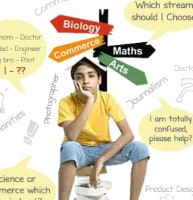
For students trying to understand which career direction may suit them, resources such as CareerGuide can help with career exploration and education planning. Students considering entrance-based undergraduate admissions can also explore CUET resources for preparation and admission guidance.
Ready to take the next step?
- Exploring More Than One Academic World
- Choosing Future-Focused Programmes
- Learning Across Different Disciplines
- Turning Ideas Into Innovation
- Building a Global Perspective
- Experiencing Life Beyond Classrooms
- Connecting Learning With Careers
- Research, Knowledge and Academic Growth
- Final Thoughts: A University Experience Built Around Possibilities
- Frequently Asked Questions About Alliance University Bangalore
1. Exploring More Than One Academic World
A multidisciplinary university can give students an opportunity to look beyond the boundaries of a single subject. At Alliance University, the academic ecosystem includes schools dedicated to business, advanced computing, applied engineering, law, design, economics, liberal arts and humanities, sciences, aviation and performing, visual and creative arts, among others.
This variety can influence the way students think about their own education. A student studying technology may become interested in entrepreneurship, while someone pursuing business may discover an interest in data, design or emerging technologies.
Such interactions are increasingly relevant because many modern careers sit between traditional disciplines. Digital marketing combines business and technology, product development can involve engineering and design, while areas such as fintech bring finance together with computing.
The opportunity to study within a wider academic ecosystem can therefore encourage students to become more flexible thinkers rather than viewing their degree as the only area they need to understand.
2. Choosing Future-Focused Programmes
The academic choices available at Alliance University reflect several areas that are becoming increasingly important in the changing professional landscape.
For 2026 admissions, the university lists programmes such as B.Tech in AI & Machine Learning, B.Tech in CSE with Quantum Computing and Information Science, Robotics & Artificial Intelligence, Cyber-Physical Systems, Data Science, Cyber Security, DevOps, Full Stack Development, Blockchain Technologies and AI & Future Technologies.
Its undergraduate portfolio also includes BBA specialisations in areas such as Finance & Accounting, Human Resource, International Business, Marketing, Operations Management, Business Analytics and FinTech, along with BCA, design, liberal arts, sciences and aviation programmes.
The value of having such choices is that students can compare different academic directions before making a decision. Technology-focused students can explore specialised computing pathways, while students interested in business can select from multiple functional areas.
For students still uncertain about their long-term plans, this range can make the decision-making process more exploratory. Instead of asking only “Which course should I take?”, students can begin asking “Which combination of knowledge and skills matches the kind of work I want to do?”
3. Learning Across Different Disciplines
Some of the most useful ideas emerge when students connect concepts from different fields. Alliance University’s multidisciplinary structure is designed around this broader academic environment, with different schools operating within the same university ecosystem.
Interdisciplinary learning can help students understand that professional problems rarely fit neatly into one academic subject. A business problem may require data analysis, a technology product may need design thinking, and a social initiative may involve economics, communication and public policy.
This way of thinking can encourage students to approach projects from more than one perspective. Rather than immediately searching for a single answer, they can learn to consider different factors and possible solutions.
For students, this can also make classroom learning feel more connected. Concepts learned in one subject may become useful in another project or activity, creating a more integrated understanding of their education.
Ready to take the next step?
4. Turning Ideas Into Innovation
Innovation becomes meaningful when students have opportunities to move from an idea to experimentation. Alliance University has developed an ecosystem around research, innovation and entrepreneurship that extends beyond conventional classroom learning.
The university’s current website includes dedicated initiatives such as a Technology Business Incubator, Institutions Innovation Council, Entrepreneurship Cell and Intellectual Property Rights support within its research and innovation ecosystem.
These platforms can provide students with a setting in which they can think about problems, develop ideas and explore whether those ideas can become useful solutions.
Entrepreneurship does not necessarily mean that every student has to launch a company. The process of developing an idea can itself teach valuable habits—questioning assumptions, testing possibilities, accepting failure and improving a solution.
For students interested in startups, innovation or research, such an environment can make university a place where ideas are not limited to assignments but can become projects worth exploring further.
5. Building a Global Perspective
Today’s professional world is increasingly interconnected, and students can benefit from exposure to perspectives that go beyond their immediate surroundings.
Alliance University’s website highlights global exposure, international linkages and a multicultural student environment as part of its broader academic ecosystem. Its international section includes study-abroad opportunities, global partnerships and research and global engagement.
International exposure can take different forms. It may involve interacting with students from other countries, participating in academic collaborations, exploring study-abroad opportunities or understanding how professional practices differ across regions.
These experiences can help students become more comfortable with unfamiliar perspectives. They can also encourage students to communicate more effectively with people who have different educational, cultural or professional backgrounds.
For a student planning a career in business, technology, design, law or another internationally connected field, developing this broader outlook can complement technical and academic knowledge.
6. Experiencing Life Beyond Classrooms
University life is not defined only by lectures, examinations and assignments. The activities students participate in outside classrooms can become an important part of their personal development.
Alliance University provides a dedicated campus-life ecosystem covering clubs and societies, academic facilities, sports and fitness, arts and culture, social responsibility, and health and well-being. Its club structure includes curricular, co-curricular, extracurricular, sports, hobby and community-service clubs.
This variety gives students different ways to participate according to their interests. Someone may prefer sports, another student may enjoy cultural activities, while someone else may want to participate in a hobby or community-service initiative.
These experiences can develop skills that are difficult to acquire through textbooks alone. Planning an event can improve organisation, participating in a team can strengthen collaboration, and presenting ideas publicly can gradually build confidence.
For many students, these experiences also become the memories that define their university years.
Ready to take the next step?
7. Connecting Learning With Careers
A university education becomes more meaningful when students can understand how their knowledge may translate into professional opportunities.
Alliance University maintains a dedicated career ecosystem that includes internships and live projects, corporate mentorship, industry engagement, placement activities, corporate events and student success stories.
The university’s homepage currently highlights recruiting partners, corporate mentors and placement-related recognition as part of its institutional profile. It reports being ranked among the top 50 institutions for placements in India by Times B-School 2026.
Internships and live projects can be especially useful because they allow students to experience professional expectations before graduation. Students can learn how teams communicate, how deadlines are handled and how theoretical concepts are applied to practical situations.
At the same time, students should not wait until their final year to think about careers. Exploring career options early through platforms such as CareerGuide can help students connect their interests and strengths with possible professional directions.
8. Research, Knowledge and Academic Growth
A university can also become a place where students learn to ask deeper questions rather than simply search for correct answers.
Alliance University is recognised as a Scientific and Industrial Research Organisation by the Department of Scientific and Industrial Research (DSIR), Government of India, according to the university. Its research ecosystem includes a Centre for Research, Centres of Excellence, doctoral research, innovation initiatives and intellectual-property support.
Research exposure can help students develop habits such as reading critically, analysing information, testing ideas and presenting evidence. These abilities can be useful across disciplines, whether a student is working on a scientific project, business research, legal analysis or a creative investigation.
For postgraduate and doctoral students, research can become a more central part of their academic journey. For undergraduate students, even smaller research projects can introduce them to the process of exploring a question systematically.
This can gradually shift students from passive learning toward independent thinking—an important quality for both higher education and professional life.
9. Final Thoughts: A University Experience Built Around Possibilities
Choosing a university is ultimately a personal decision. The right environment depends on a student’s interests, academic goals, preferred learning style and long-term aspirations.
Alliance University offers a broad academic ecosystem where students can explore disciplines ranging from management and law to advanced computing, engineering, design, sciences, liberal arts and aviation. Its current structure combines academic programmes with research, innovation, international engagement, student activities and career-oriented opportunities.
For students entering university in 2026, this breadth can be valuable because career paths are changing rapidly. The ability to learn something new, work across disciplines and adapt to different situations can be just as important as the knowledge gained from a single course.
The university’s emphasis on immersive and interdisciplinary learning also reflects a wider shift in higher education—students are increasingly expected to become active participants in their education rather than simply recipients of information.
Ultimately, university is a period of exploration. Students can test their interests, develop new skills, meet people from different backgrounds, work on ideas and gradually build the confidence needed for their next step.
Alliance University Bangalore 2026 offers students a broad academic and campus ecosystem where knowledge, innovation, creativity, global perspectives and career preparation can come together to shape a more complete university experience.
10. Frequently Asked Questions About Alliance University Bangalore
Q1. Where is Alliance University located?
Ans: Alliance University is located in Bengaluru, Karnataka, with multiple campuses and academic locations forming part of its university ecosystem. Its official website currently lists the Alliance Central Campus, Alliance Ascent Campus, Alliance Global Business Campus, Alliance Global Design Campus, Alliance Impact Campus and AU-QUASAR Campus.
Q2. What programmes does Alliance University offer?
Ans: Alliance University offers undergraduate, postgraduate, doctoral and diploma programmes across areas including business, management, engineering, advanced computing, law, design, economics, liberal arts, sciences, aviation and other disciplines.
Q3. Which emerging technology programmes are available?
Ans: The 2026 admissions listings include programmes such as AI & Machine Learning, Quantum Computing and Information Science, Robotics & Artificial Intelligence, Cyber-Physical Systems, Cyber Security, DevOps, Full Stack Development, Blockchain Technologies and AI & Future Technologies.
Q4. Does Alliance University offer management programmes?
Ans: Yes. The university offers business and management programmes, including BBA pathways with areas such as Finance & Accounting, Human Resource, International Business, Marketing, Operations Management, Business Analytics, FinTech and Aviation Management.
Q5. Does Alliance University have design and creative programmes?
Ans: Yes. Its undergraduate offerings include design programmes covering areas such as Communication Design, Product Design, Interior Design, Interaction Design, Animation Film Design and Fashion Design, along with fine arts options.