The role of a designer is changing as businesses, technologies and consumer expectations evolve. Today’s designers may work alongside engineers, entrepreneurs, researchers, marketers and technology teams to solve problems that cannot be addressed through aesthetics alone.
This shift is creating demand for designers who can understand people, investigate problems, think critically, experiment with ideas and communicate solutions effectively.
BITS Design School (BITSDes), Mumbai, is a specialised design school established by BITS Pilani that focuses on undergraduate design education. Its four-year Bachelor of Design (B.Des.) (Hons.) programme provides students with a structured environment to develop design knowledge through interdisciplinary learning, practical projects and studio-based work.
Ready to take the next step?
- Why Design Education Is Becoming More Interdisciplinary
- Starting With Foundations Before Choosing a Direction
- Studio Learning Makes Design a Process of Doing
- Learning to Understand Problems Before Solving Them
- From Ideas to Prototypes and Experiments
- Connecting Design With Technology and Business
- Developing Communication and Collaboration Skills
- Portfolio Development as a Record of Growth
- Preparing for a Profession That Keeps Changing
- Final Thoughts
- Frequently Asked Questions
1. Why Design Education Is Becoming More Interdisciplinary
Design problems rarely belong to a single subject.
Creating a new product can require an understanding of engineering, materials, human behaviour and business. Developing a digital service can involve technology, psychology, communication and user research. Building a brand may require visual communication, strategy and an understanding of culture.
This is why contemporary design education increasingly brings different areas of knowledge together.
BITS Design School’s undergraduate programme is designed around this broader understanding of design. Instead of treating design as an isolated creative discipline, students can develop an understanding of problem-solving, research, making and communication.
For students, this approach can be particularly valuable because it allows them to see how design connects with the wider professional world.
2. Starting With Foundations Before Choosing a Direction
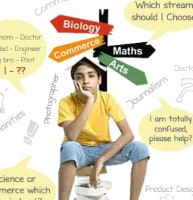
Students entering design education may not always know exactly what type of designer they want to become.
One student may initially be interested in graphics and later discover an interest in digital products. Another may begin with an interest in objects and develop an interest in user experience or research.
A strong undergraduate design journey can therefore begin by establishing fundamental design knowledge before students move towards more focused areas.
At BITS Design School, the B.Des. programme provides students with a foundation through which they can explore different dimensions of design before developing their individual interests.
This allows students to use the early part of their education to understand what kind of problems they enjoy solving and what kind of designer they want to become.
3. Studio Learning Makes Design a Process of Doing
Design cannot be learned entirely through textbooks.
A student can read about user research, prototyping or visual communication, but understanding these concepts becomes different when they are applied to an actual problem.
Studio-based learning provides an environment where students can develop ideas, receive feedback, make changes and try again.
At BITS Design School, practical and project-oriented learning forms an important part of the undergraduate design experience. Students can progressively develop their ability to move from identifying a problem to exploring possible solutions.
This repeated cycle of research, ideation, experimentation, feedback and refinement is central to how professional designers work.
Ready to take the next step?
4. Learning to Understand Problems Before Solving Them
One of the most important skills in design is knowing what problem actually needs to be solved.
A student may initially see a problem from the perspective of a product or interface. Research can reveal that the real issue lies somewhere else.
For example, improving a digital application may not simply require a better interface. Users may struggle because the information is organised poorly, the process is confusing or the service does not match their expectations.
Design education can teach students to investigate these underlying issues before jumping directly into solutions.
This problem-first approach helps develop designers who can ask better questions, understand different perspectives and create solutions based on evidence rather than assumptions.
5. From Ideas to Prototypes and Experiments
A design idea becomes more useful when it can be tested.
Prototyping allows designers to transform abstract concepts into something that people can interact with, evaluate or critique. A prototype can be a physical model, a digital interface, a service flow or another representation of a proposed solution.
Students can learn through this process that the first idea is rarely the final answer.
Testing can reveal unexpected problems. Feedback can lead to new directions. A prototype may fail, but that failure can provide valuable information for the next iteration.
This experimental approach helps students develop patience, adaptability and the confidence to improve their work instead of becoming attached to an initial concept.
6. Connecting Design With Technology and Business
Designers increasingly work in environments where technology and business decisions directly influence what gets created.
Digital products require collaboration between designers and developers. Consumer products need to consider manufacturing and commercial viability. New services must balance user requirements with organisational goals.
Understanding these connections can make design education more relevant to professional environments.
BITS Design School’s position within the broader BITS Pilani ecosystem also creates an academic context where design can be considered alongside technology, science, management and entrepreneurship.
For students, this interdisciplinary perspective can help them understand that good design must work not only creatively but also practically.
7. Developing Communication and Collaboration Skills
Professional designers rarely work alone.
A designer may need to present an idea to a client, explain research findings to a product team, collaborate with engineers or defend a design decision during a review.
Communication therefore becomes an important part of design education.
Students need to learn how to explain why they made a particular decision rather than simply showing the final output.
Collaborative projects can also help students understand different viewpoints, divide responsibilities and respond constructively to criticism.
These skills can become valuable when students transition from academic projects to professional design teams.
Ready to take the next step?
8. Portfolio Development as a Record of Growth
A design portfolio is more than a collection of attractive images.
A strong portfolio can show how a designer approaches a challenge—from initial research and observations to sketches, experiments, prototypes, iterations and final outcomes.
For design students, the portfolio can gradually become a record of their development throughout college.
Projects completed during a four-year B.Des. journey can help students demonstrate different capabilities and areas of interest. Over time, students can identify the type of work they want to be known for and curate their portfolio accordingly.
This can become particularly important when applying for internships, design roles, higher education or professional opportunities.
9. Preparing for a Profession That Keeps Changing
Design careers are constantly evolving alongside technology and society.
The growth of digital products, artificial intelligence, new manufacturing technologies, immersive experiences and changing consumer behaviour is creating new kinds of design challenges.
Students therefore need more than knowledge of today’s tools. They also need the ability to learn new tools, understand unfamiliar problems and adapt their approach.
A design education that emphasises curiosity, research, experimentation and critical thinking can help students develop these longer-term capabilities.
For BITS Design School students, the objective is therefore not simply to learn a fixed set of design techniques but to develop the mindset needed to continue learning as the profession changes.
10. Final Thoughts
A modern design education is ultimately about developing the ability to observe, question, understand and create.
BITS Design School provides an undergraduate design environment where students can explore these abilities through its four-year B.Des. (Hons.) programme. Its approach combines design learning with practical projects, studio-based development and interdisciplinary thinking.
For students considering design after Class 12, the most important question should not be whether they already know professional design software or have a perfect portfolio. Instead, they should ask whether they enjoy solving problems, exploring ideas, understanding people, experimenting and learning through making.
BITS Design School can be considered by students who want to build a foundation for careers in design while developing the flexibility to work across different industries and professional contexts.
Students looking for university comparisons, career planning and admission guidance can also explore CareerGuide.com.
For students preparing for undergraduate entrance examinations and counselling, CareerGuide CUET can also provide useful guidance.
11. Frequently Asked Questions
Q1. What is BITS Design School?
Ans: BITS Design School (BITSDes) is a specialised design school established by BITS Pilani in Mumbai. It focuses on undergraduate design education through its Bachelor of Design (B.Des.) (Hons.) programme.
Q2. What programme does BITS Design School offer?
Ans: BITS Design School offers a four-year Bachelor of Design (B.Des.) (Hons.) programme designed around design practice, interdisciplinary learning and project-based education.
Q3. Is BITS Design School suitable for students who are not expert artists?
Ans: Students do not necessarily need to enter design education as professional artists. Design involves research, problem-solving, ideation, communication, experimentation and understanding users in addition to visual creativity.
Q4. How important is practical learning in design education?
Ans: Practical learning is important because design skills develop through repeated experimentation. Projects, studio activities, prototyping, feedback and iteration can help students understand how design concepts work in real situations.
Q5. Does design education involve technology?
Ans: Yes. Modern design increasingly interacts with technology through digital products, interfaces, connected devices, emerging technologies and technology-enabled services. Designers may therefore collaborate closely with technology professionals.